
Reconnecting light with the living world
Light shapes how we experience space—how we move, feel, and connect. Yet for much of modern design, lighting has been treated as purely functional: a tool for visibility, standardized and separated from the natural systems that sustain us.
Biophilic lighting design offers a different approach.
It asks not only how light performs, but how it relates—to the rhythms of nature, to the materials that carry it, and to the people who live within it.
For a broader look at how material choices impact sustainability and performance, see our guide to mycelium lighting vs traditional materials.
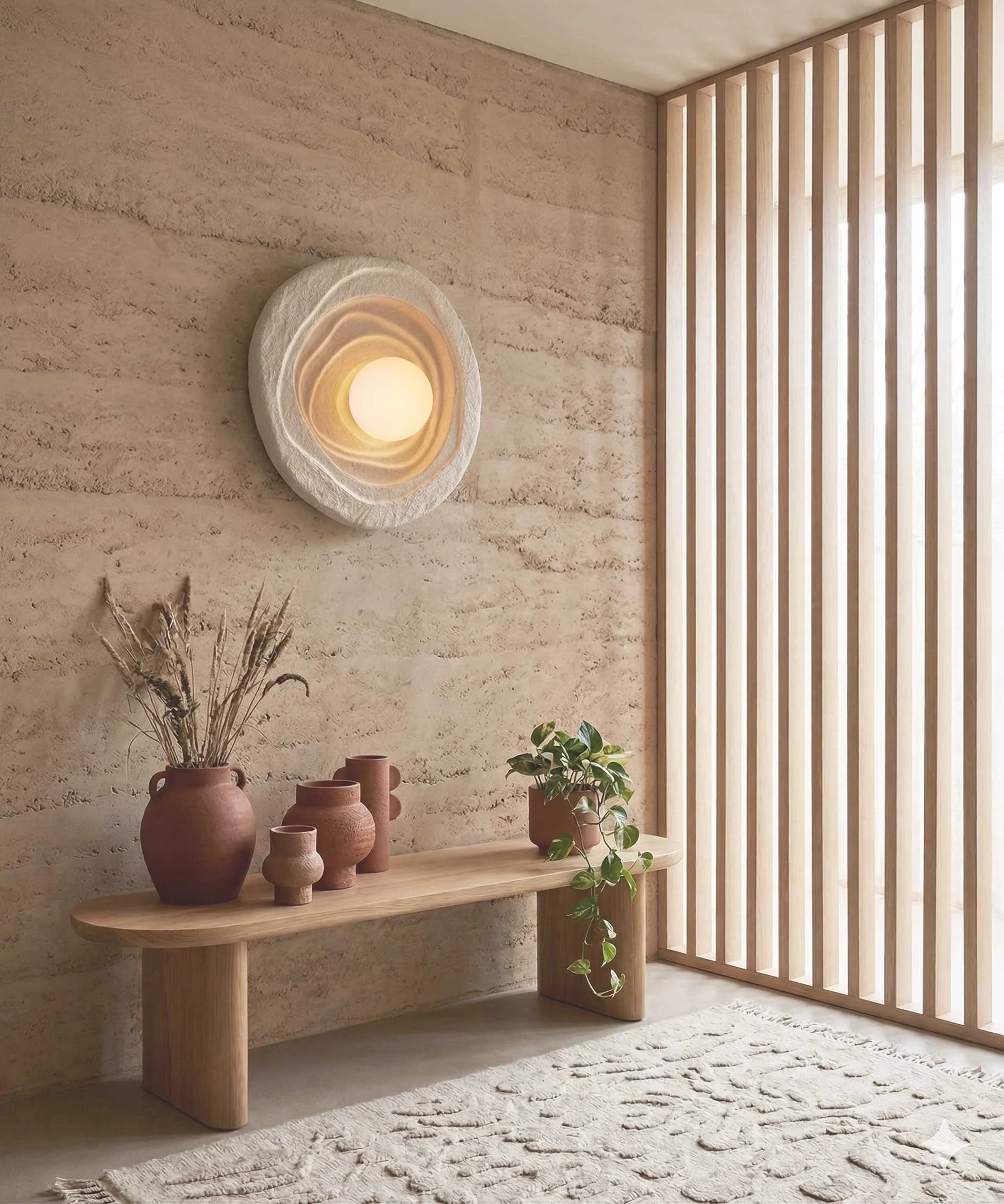
MushLume Terrace Journey Inward Sconce emulates nature in biophilic interior (AI assisted image)
What is biophilic lighting design?
Biophilic lighting design is an approach that integrates natural principles, materials, and sensory experiences into the way light is created and experienced.
It draws from the broader concept of biophilic design, which emphasizes the human need to connect with nature in built environments.
If you're new to the material itself, you can start with what mycelium lighting is and how it works.
In lighting, this can include:
Natural material expression
Soft, diffused illumination
Shape and form using variation and irregularity
Natural textures and patterning
Visual and emotional warmth
Rather than isolating light as a technical system, biophilic lighting considers it part of a living environment.
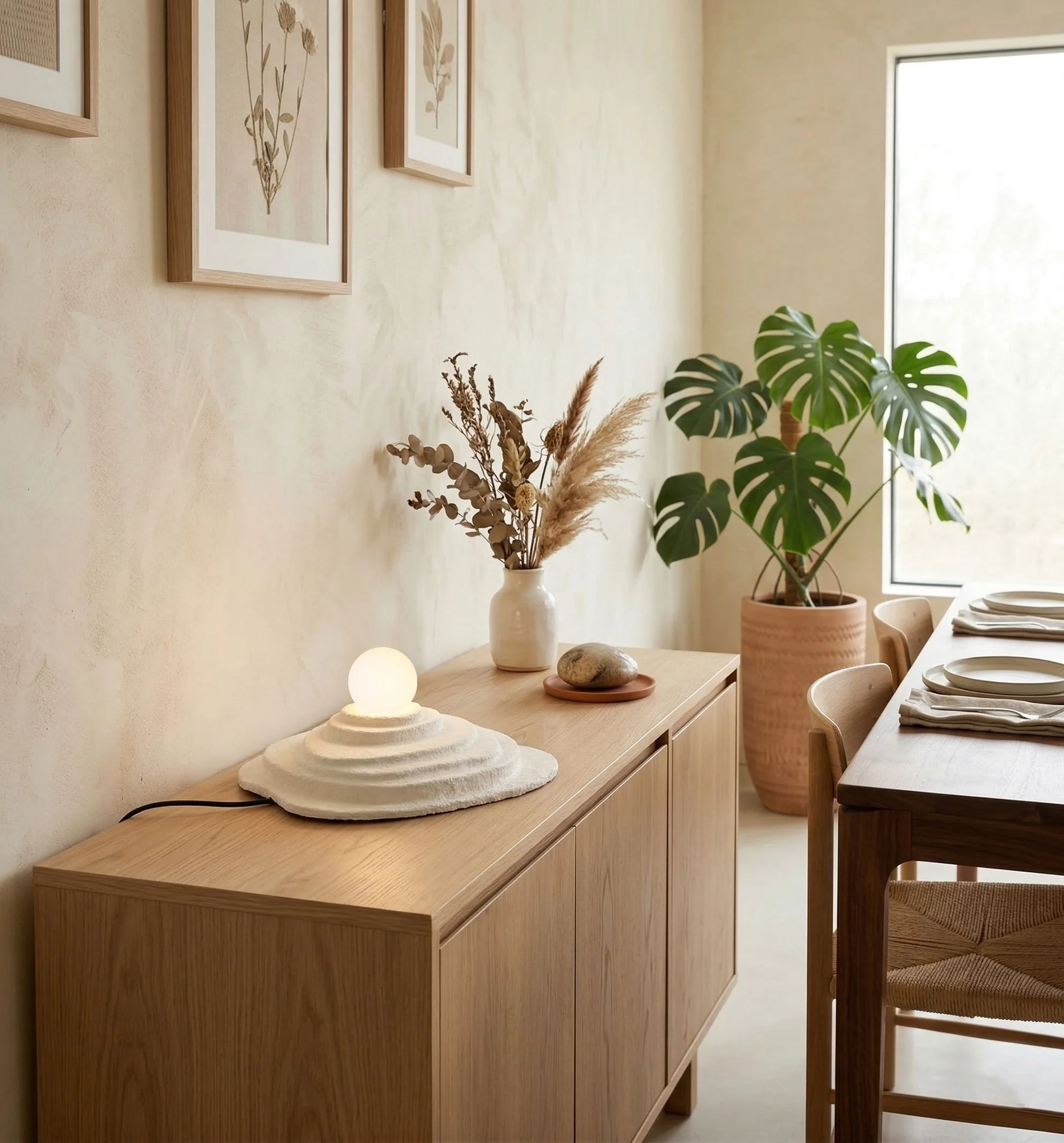
Biophilic table lamp grown from mycelium adds a touch of texture and natural form to a residential dining room (AI assisted image)
Why connection to nature matters in design
A growing body of research suggests that exposure to natural elements in built environments can support well-being, focus, and overall experience.
To understand how these ideas translate into material choices, explore our breakdown of the most sustainable lighting materials.
While the degree of impact varies by context, the underlying idea is consistent:
Humans are biologically attuned to natural systems.
Design that reflects those systems can feel more intuitive, calming, and engaging.
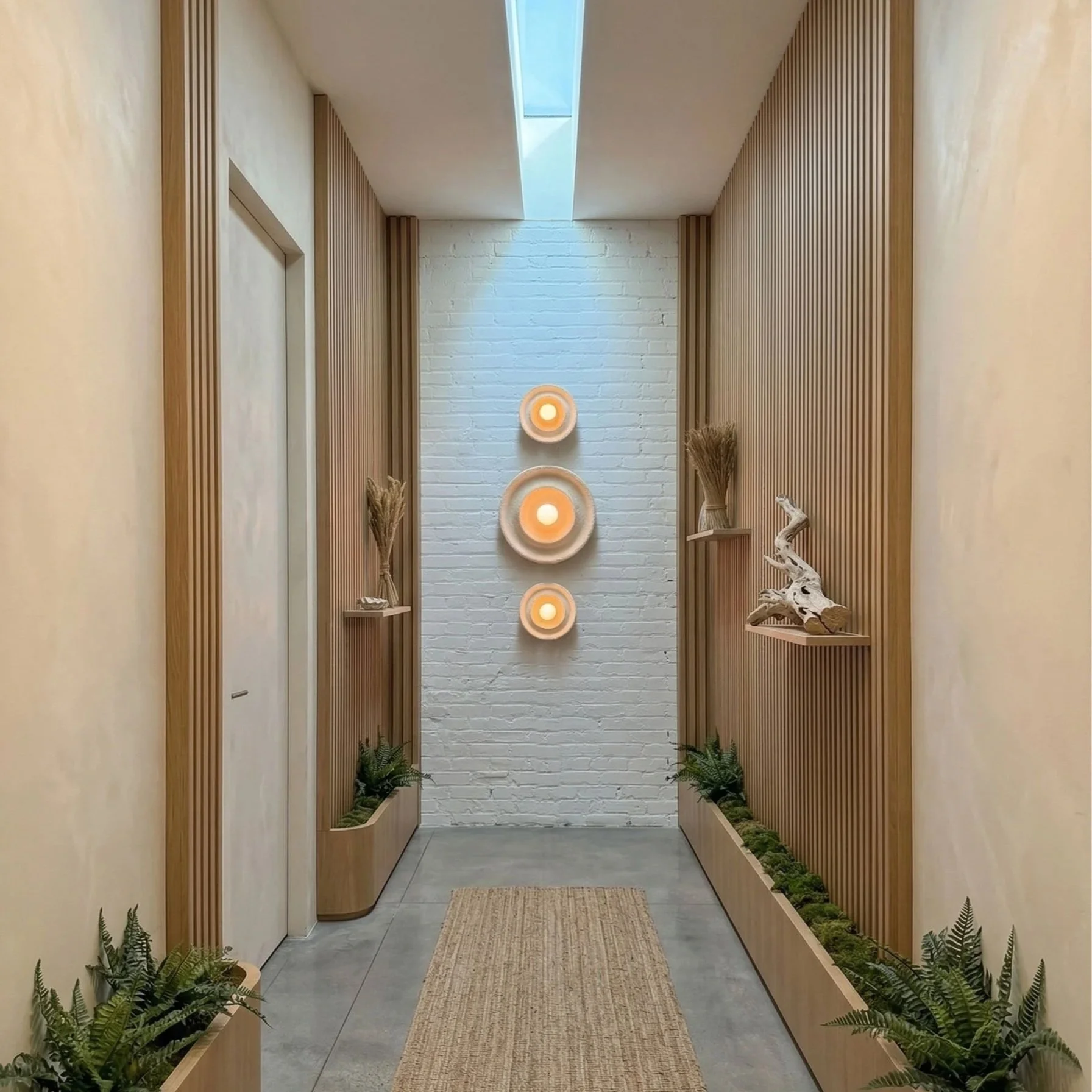
MushLume Radiate Sconces in a biophilic interior hallway where natural light meets accent lighting (AI assisted)
The role of lighting in biophilic design
Lighting plays a unique role because it is both functional and experiential.
It affects:
Mood and atmosphere
Perception of materials
Spatial depth and comfort
Biophilic lighting shifts the goal from uniform brightness to quality of light—how it feels, not just how it measures.
Key characteristics include:
1. Diffused, soft illumination
Natural environments rarely produce harsh, uniform light. Biophilic lighting often favors gentle diffusion that reduces glare and creates visual comfort.
2. Subtle variation
Nature is never perfectly consistent. Slight variations in texture, tone, and shadow create a more dynamic and engaging experience.
3. Material expression
The material surrounding a light source shapes how light is emitted. Natural materials can soften, warm, and modulate light in ways synthetic materials often do not.
4. Sensory connection
Lighting becomes something you experience—not just something you see. Texture, warmth, and depth all contribute.
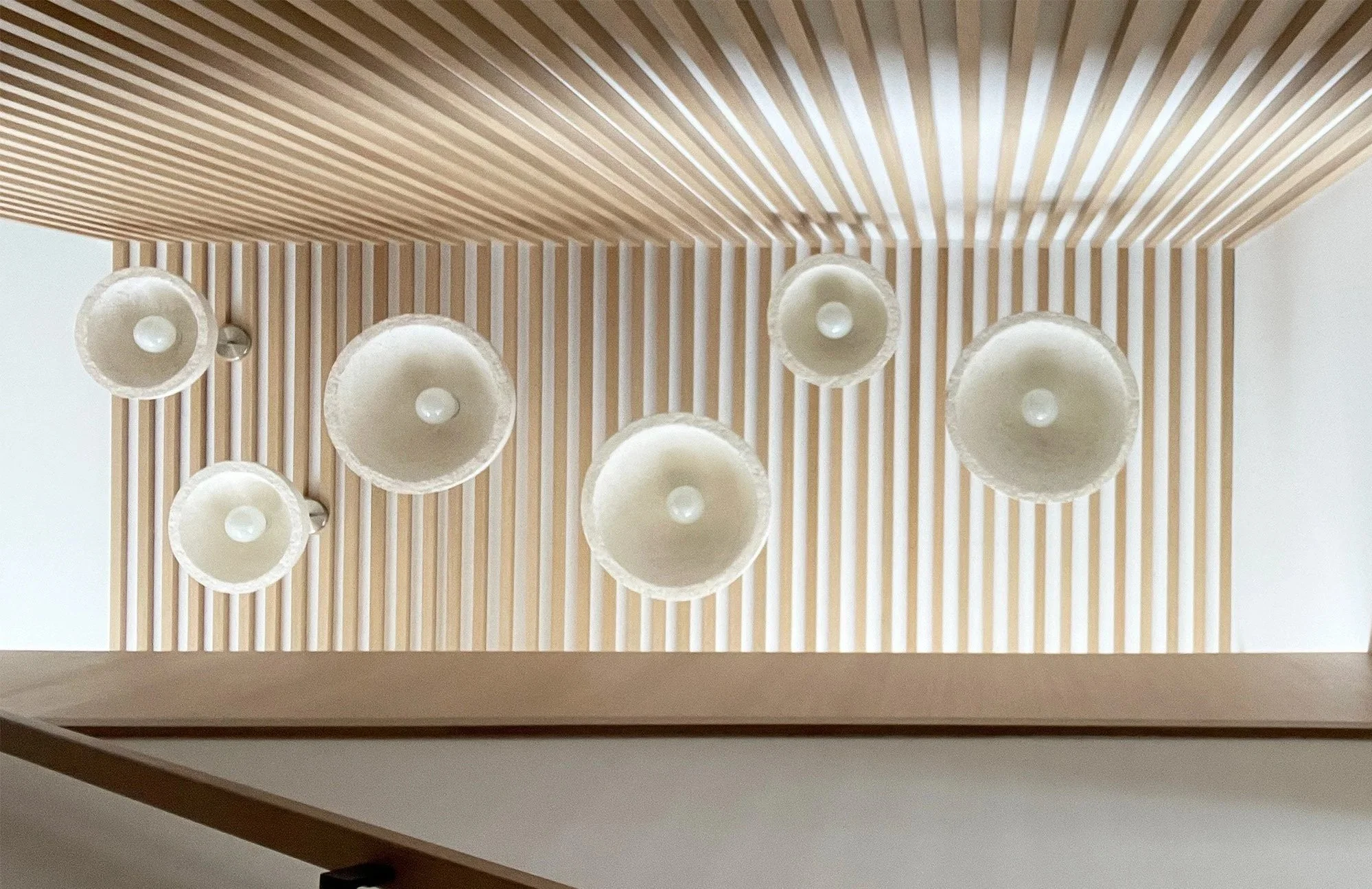
Looking upwards at a cluster of MushLume Hemi Pendants hanging over a biophilic staircase in a residential home in Minnesota
Materials as a bridge between light and nature
In biophilic lighting, materials are not neutral—they are active participants.
Natural and bio-based materials introduce:
Irregularity
Tactility
Organic structure
These qualities influence how light interacts with a surface—how it diffuses, reflects, and ultimately feels within a space.
Mycelium as a biophilic material
Mycelium, the root structure of fungi, offers a particularly compelling example.
To better understand how this material is created, see how mycelium lamps are made.
When combined with plant fibers like hemp, it forms a lightweight, soft material that:
Naturally diffuses light
Creates soft shadow gradients
Carries subtle variation in texture
Because it is grown rather than manufactured, each piece reflects the conditions of its formation—introducing a level of uniqueness that aligns closely with biophilic principles.
For a deeper comparison of how mycelium performs against conventional materials, revisit mycelium lighting vs traditional materials.
Grown to shape, with no material waste, mycelium offers the ability to create lighting forms that mimic nature.
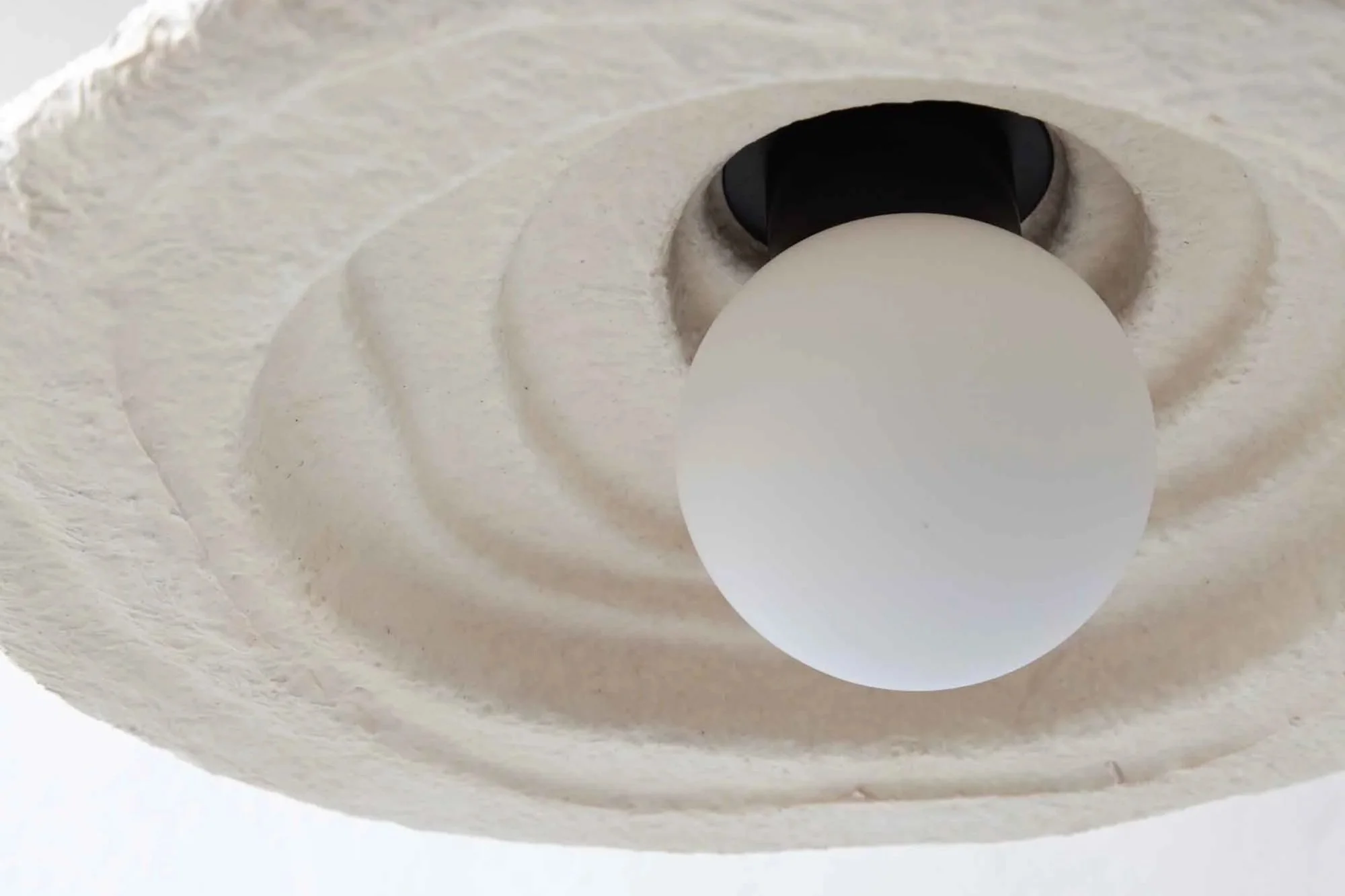
Soft mycelium tiers of the MushLume Terrace Pendant emulate the natural terrain
Where biophilic lighting is most impactful
Residential spaces
In homes, lighting shapes daily rituals—morning, evening, rest. Biophilic lighting can create a sense of calm and grounding.
Hospitality environments
Hotels, restaurants, and wellness spaces increasingly prioritize atmosphere and emotional experience. Lighting that feels natural and immersive supports this shift.
Workspaces
As workplaces evolve, there is growing interest in environments that support focus and well-being. Biophilic elements, including lighting, are part of that conversation. While an emphasis on non-toxic interior elements continues to drive material choices.
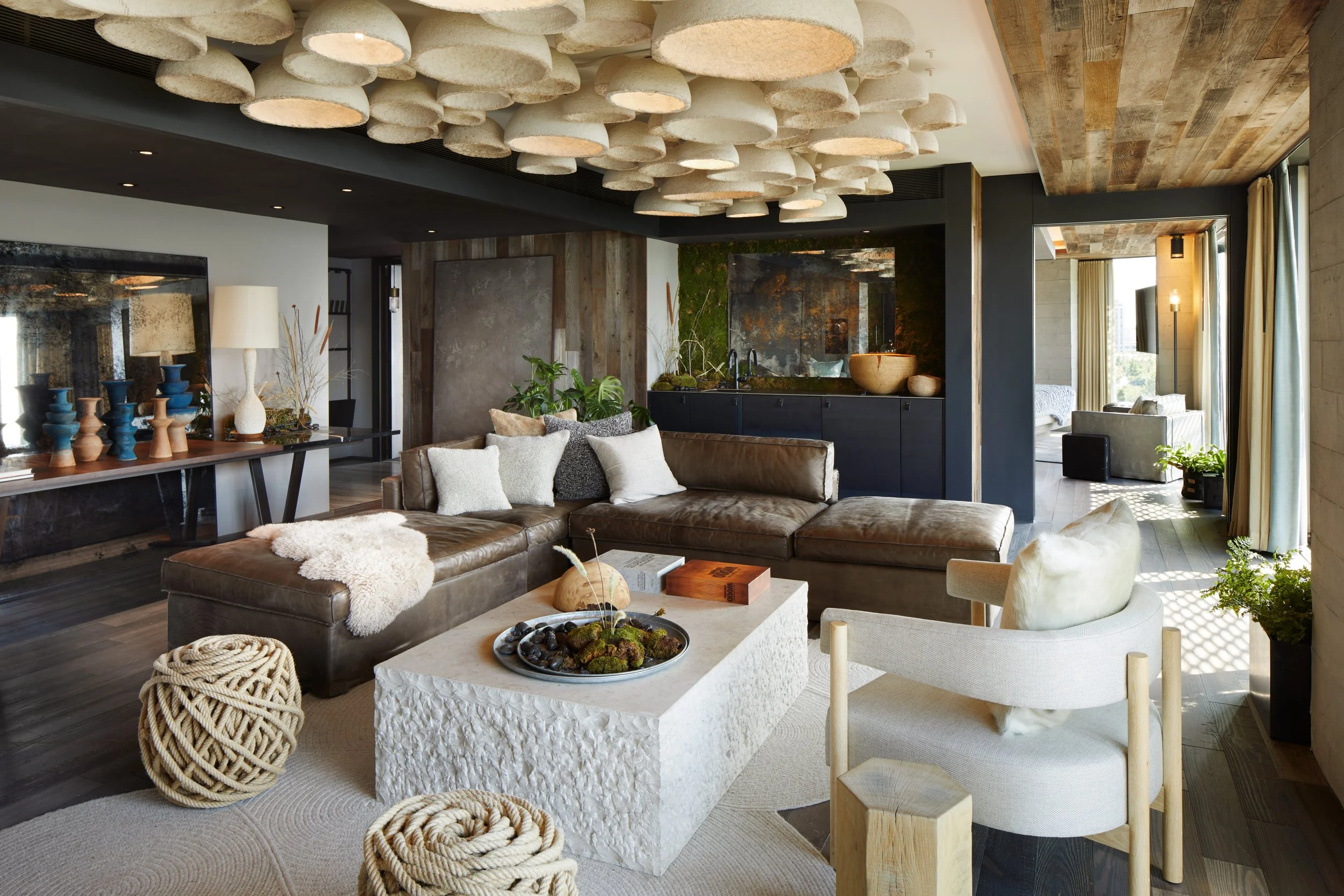
MushLume pendants clustered on the ceiling of 1Hotel Brooklyn Bridge—a hotel group known for their deep integration of nature in design
Beyond performance: a shift in design values
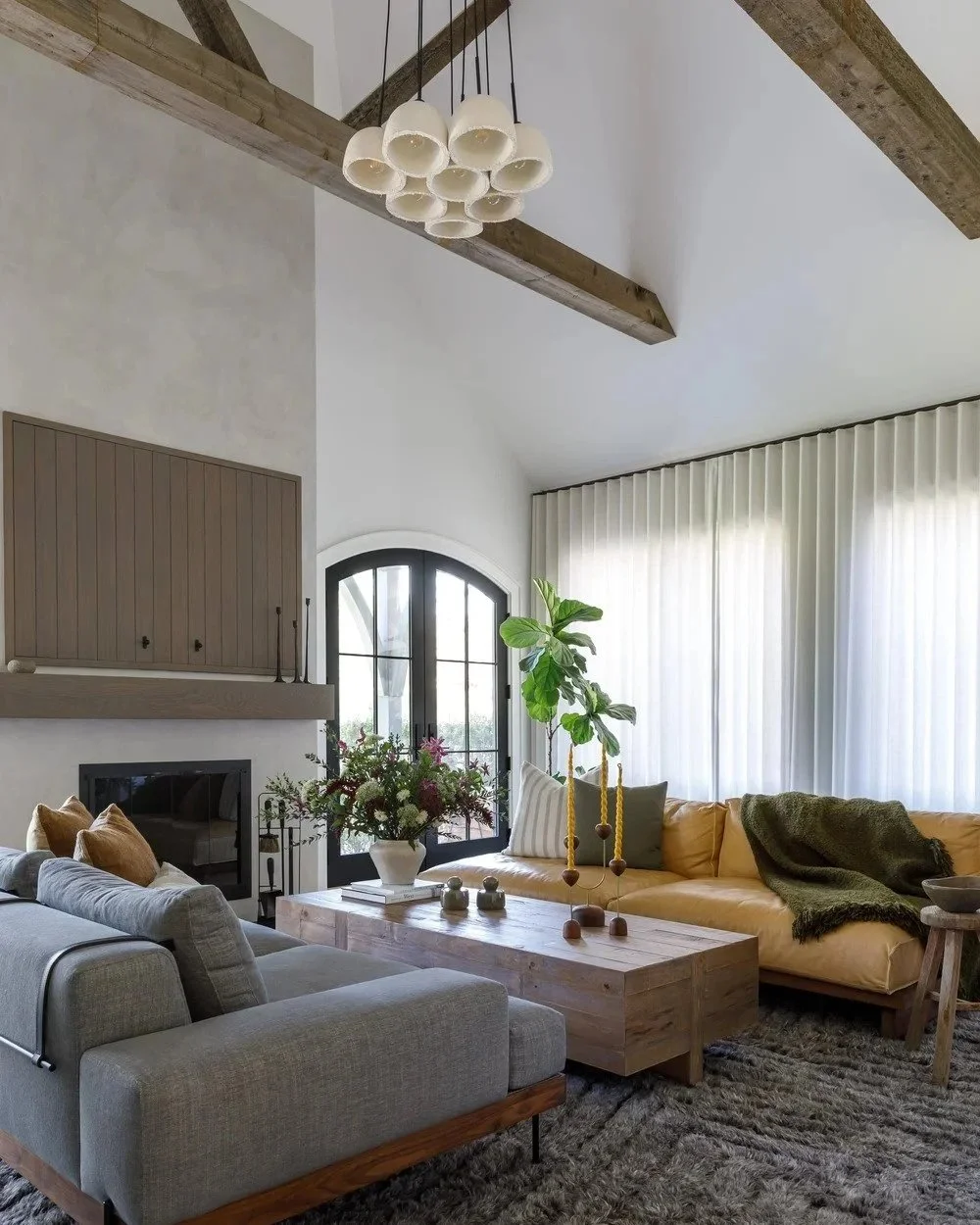
MushLume’s Cluster Chandelier in a private residence in Upstate New York designed by Becky Shea Design
Traditional lighting design often prioritizes:
Efficiency
Output
Uniformity
These remain important. But biophilic lighting expands the criteria to include:
Emotional resonance
Sensory richness
Connection to natural systems
It reflects a broader shift in design—from purely functional solutions to more holistic experiences.
Common questions
Is biophilic lighting only about natural materials?
No. While materials play a key role, biophilic lighting also includes qualities like diffusion, variability, and spatial experience.
Does it replace traditional lighting?
Not entirely. It often complements existing systems, adding layers of warmth and texture. For a full comparison, see mycelium lighting vs traditional materials.
Is it measurable?
Some aspects (like light levels) are measurable, while others—such as emotional response—are more subjective.
Explore our FAQ article that provides a deep dive into our most frequently asked questions or search our FAQ page by clicking the button below.
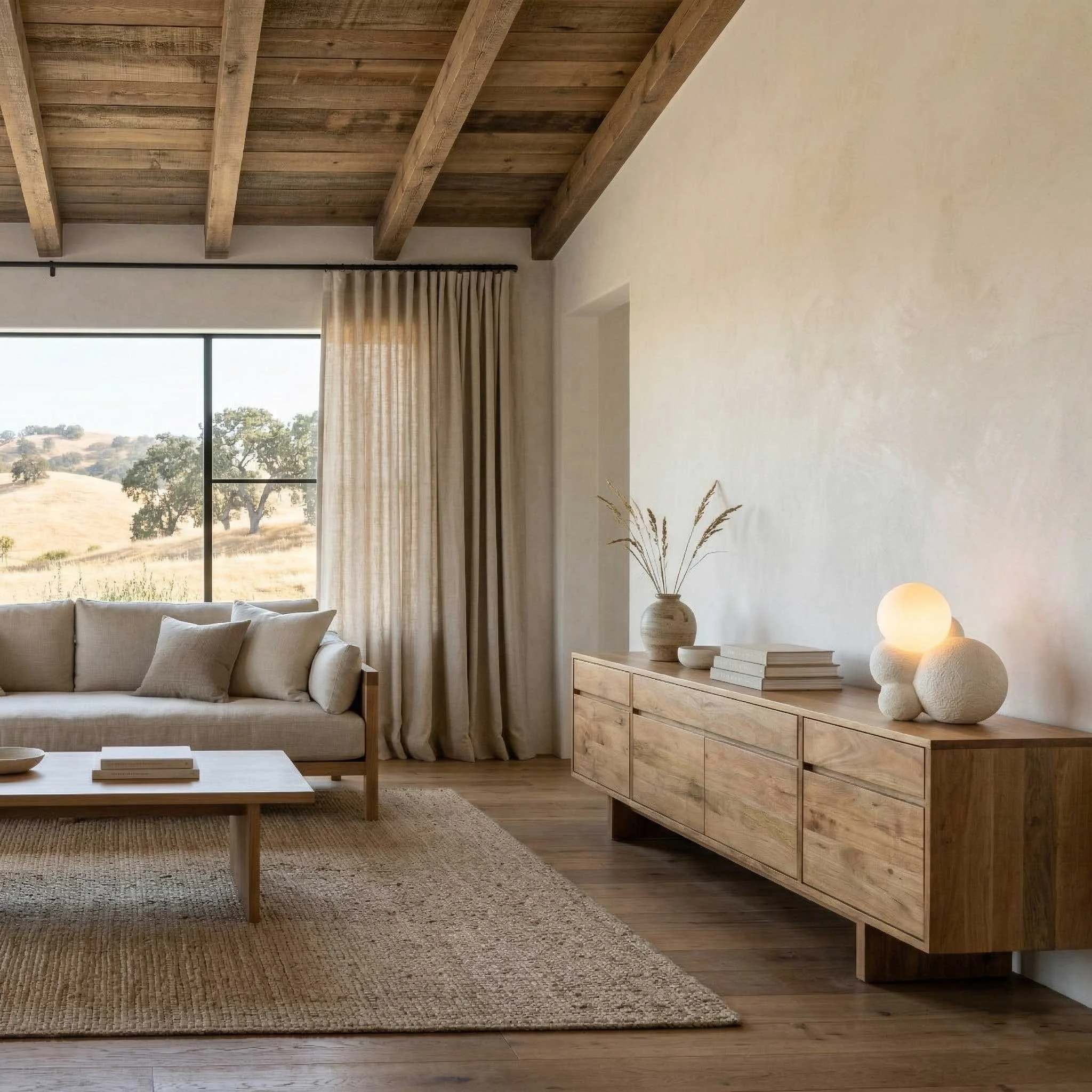
MushLume Bubble Table Lamp in biophilic interior space (AI assisted)
A more connected way to design with light
Biophilic lighting design invites a reconsideration of what light can be.
Not just illumination, but atmosphere.
Not just function, but feeling.
Not just output, but relationship.
To explore this concept further: read Lighting the Way: How Our Products Transform Spaces and the Planet
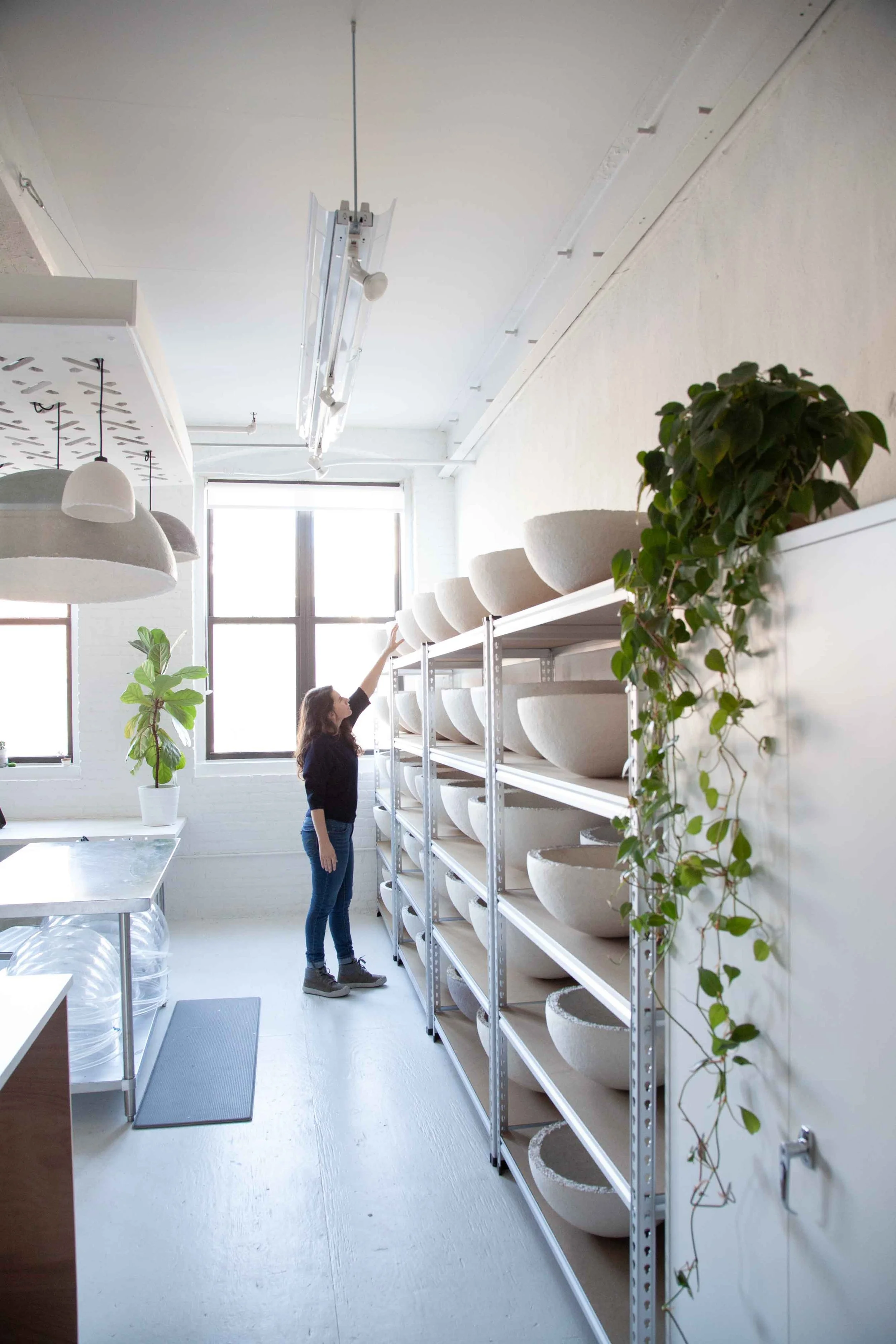
“Our aim is help foster a deeper connection to nature through curiosity, awe and beauty. We co-create lighting objects with mycelium—honoring the living organism, human handcraft and our desire to create heirloom interior decor that is an expression of shared values between people and planet.”
Danielle Trofe
Founder | Biodesigner
Final takeaway
Biophilic lighting design centers the relationship between light, material, and human experience—bringing natural principles into the spaces we inhabit.
It does not require a complete departure from existing systems, but rather a shift in intention: toward materials, forms, and qualities that feel more aligned with the natural world.
In doing so, it opens the door to spaces that are not only well-lit, but deeply felt.