
Project Details
Project:Blue Park Kitchen
Locations: New York City
Project Type: Restaurant, Hospitality
Interior Design:Drive Hospitality
Products: MushLume Hemi Pendants and Cup Light Pendants
Applications: Restaurant Dining Room
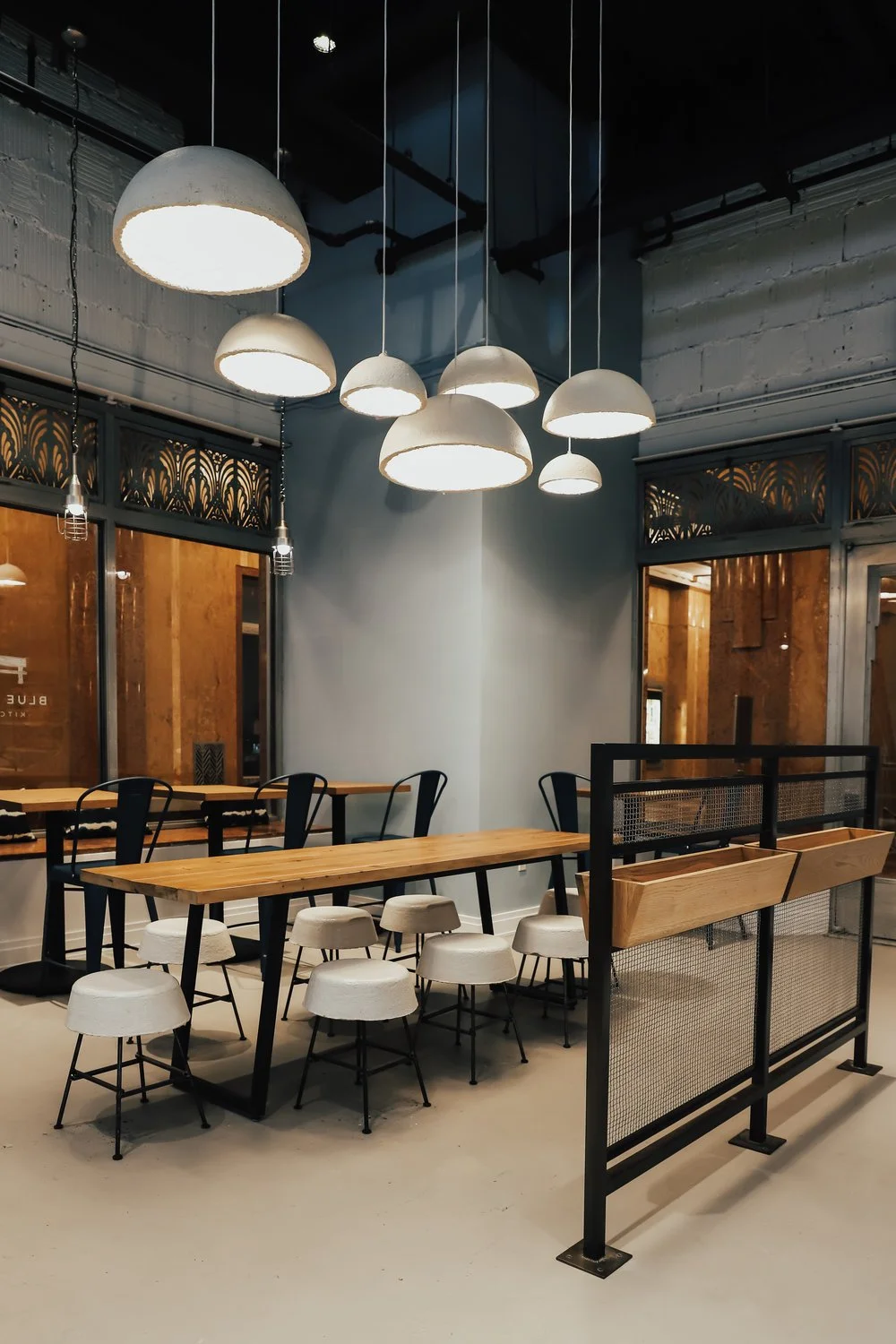
A cluster of mycelium pendants hang over a family-style table in the dining room of NYC-based Blue Park Kitchen
When Blue Park Kitchen opened its first New York City restaurant in Lower Manhattan in 2018, its philosophy extended beyond what was served on the plate. The independently owned restaurant wanted to create a welcoming space that reflected the same attention to sourcing, well-being and material choices that shaped its food.
Working with Drive Hospitality, Blue Park Kitchen selected MushLume’s locally grown mycelium lighting to bring that philosophy into the physical environment.
Three years later, Blue Park opened a second location in Midtown Manhattan. This time, the collaboration evolved: the natural lampshades were customized with edges dipped in Blue Park’s unmistakable bright blue, connecting the biological character of the material with the restaurant’s bold visual identity.
Together, the two locations demonstrate how sustainable restaurant lighting can express a brand in different ways—first through the material itself and then through thoughtful customization.

In Blue Park Kitchen’s minimalistic interior, MushLume’s sustainable pendants become the focal point, inviting a storied material like mycelium to anchor the restuaruant’s ethos.
A Restaurant Built Around Considered Choices
Blue Park Kitchen began with a simple idea: food should be nourishing, honest and delicious. Its menu centers on fresh ingredients and comforting food prepared from scratch, with choices suited to a range of tastes and dietary needs.
The restaurant describes its spaces as a respite from the pace of New York City—places where guests can pause for lunch, meet with colleagues or gather around food. That sense of warmth and care provided a natural context for MushLume lighting.
Rather than introducing another conventionally manufactured decorative material, the project team selected lampshades grown from mycelium and hemp in Brooklyn. The fixtures brought a locally cultivated biomaterial into a restaurant whose identity was already grounded in thoughtful sourcing.
The connection was more than aesthetic. In both the food and the interior, raw ingredients were transformed through careful processes into something functional, welcoming and memorable.
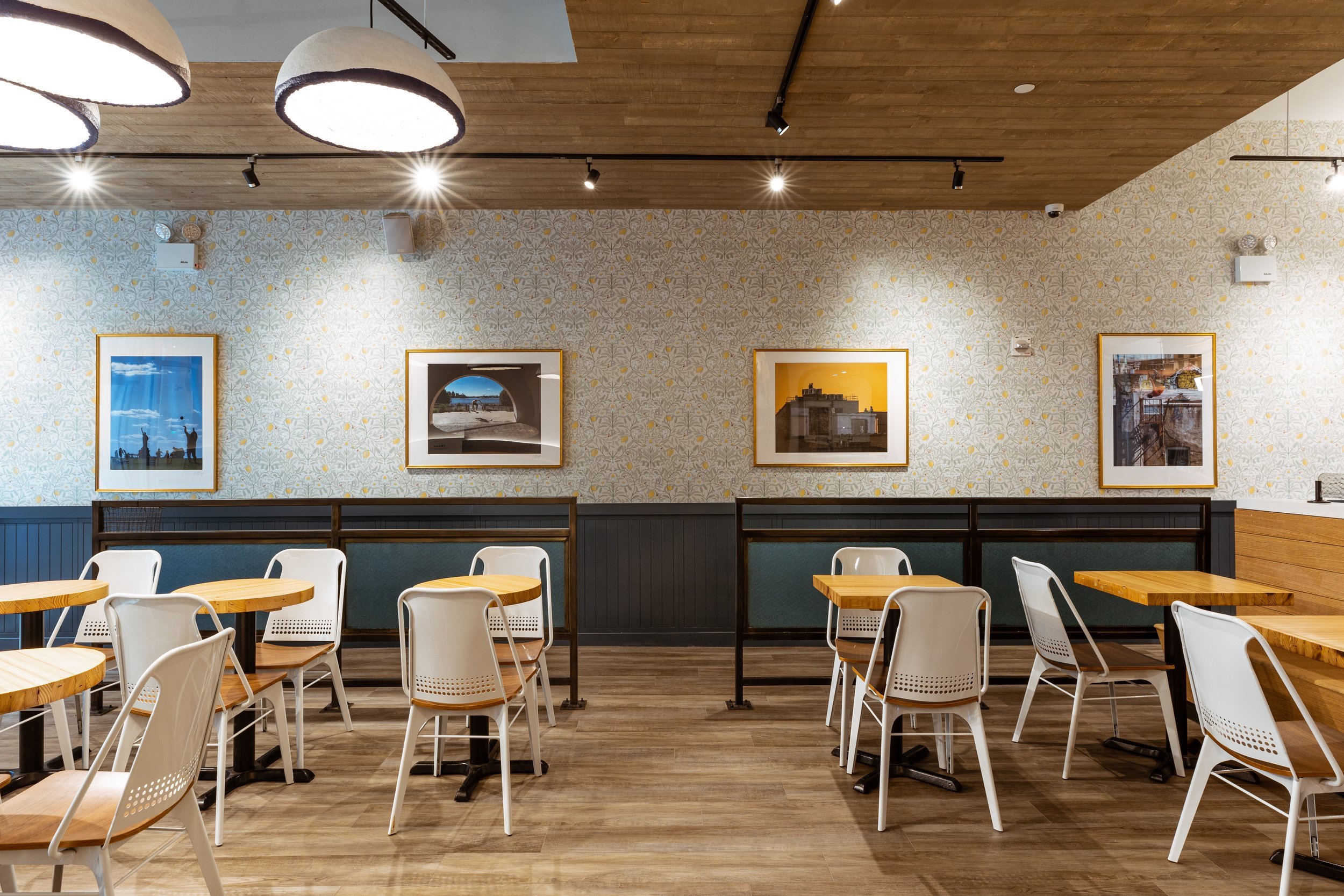
Sustainable pendant lampshades grown from mycelium and hemp offer light and sound absorption
The First Blue Park Kitchen: Lower Manhattan, 2018
The original Blue Park Kitchen opened in Lower Manhattan at 70 Pine Street in 2018.
For the flagship restaurant, the MushLume lampshades were used in their natural state, allowing the pale color and organic surface of the mycelium to remain central to the installation. Their softly textured forms introduced warmth into the fast-paced dining environment while giving guests a visible connection to a material grown rather than manufactured conventionally.
Mycelium is the branching vegetative structure of fungi—often described in accessible language as the roots of mushrooms. During MushLume’s biofabrication process, mycelium grows throughout a hemp substrate, forming a dense network of microscopic fibers that binds the material together. The resulting lampshades are then dried, heat-treated, finished and assembled as lighting fixtures.
Every shade develops slight variations in texture and surface pattern during growth. In a hospitality interior, these differences give repeated fixtures a shared visual language without making them appear mechanically identical.
For Blue Park Kitchen, the natural material became part of the dining atmosphere: understated enough to complement the interior, but unfamiliar enough to invite a closer look.

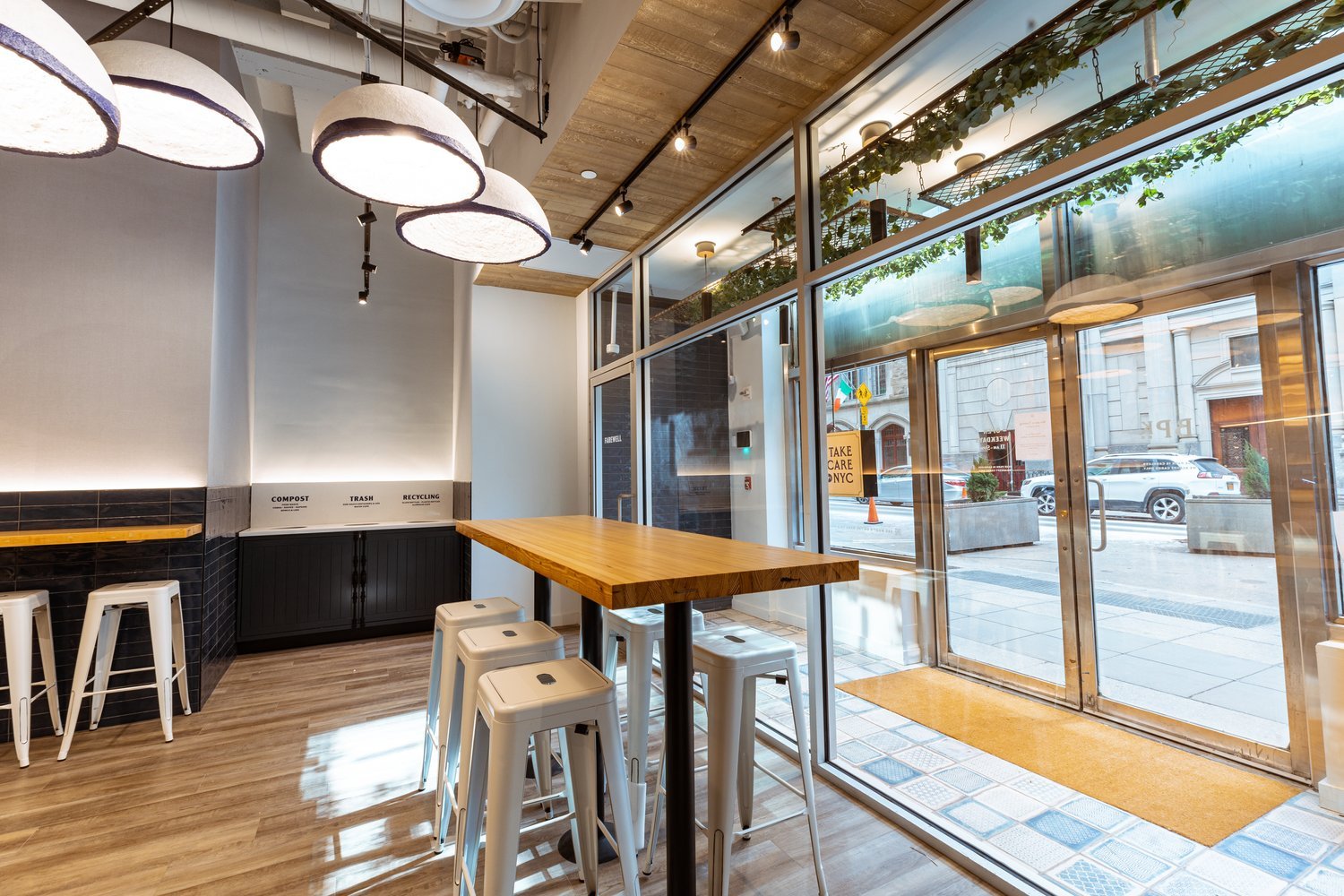
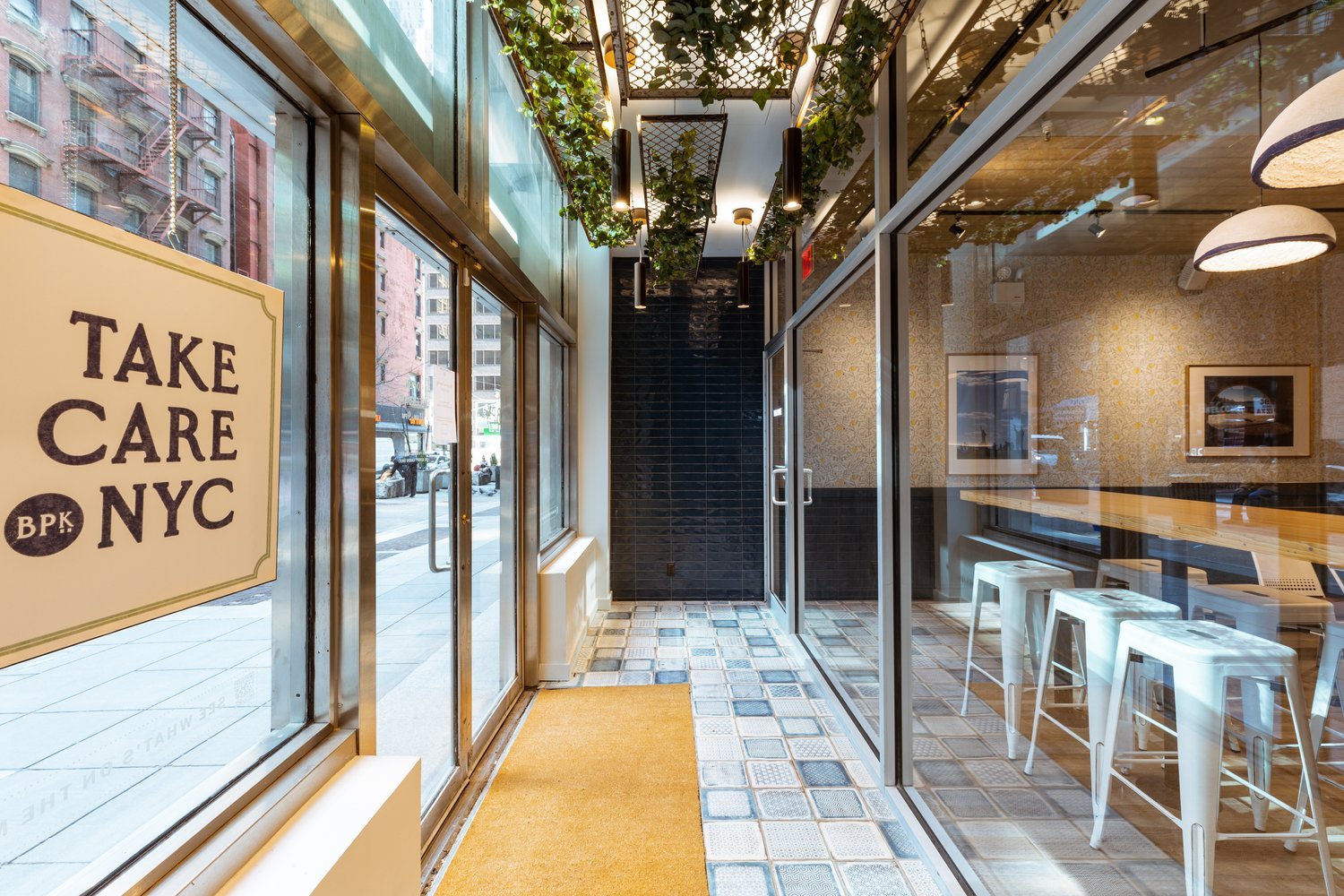
From the outside looking into the restaurant, featuring seven MushLume mycelium pendants in various sizes
Evolving the Design for Midtown Manhattan
When Blue Park Kitchen prepared to open its second location in Midtown Manhattan in 2021, the goal was not simply to reproduce the first restaurant.
Blue Park Kitchen and Drive Hospitality returned to MushLume, but the second project presented an opportunity to reinterpret the lighting for a new space. Together, we explored how color could be introduced while preserving the natural character of the mycelium-grown shades.
The solution was to dip the edges of the lampshades in Blue Park’s signature bright blue.
This relatively focused intervention created a distinct expression for the Midtown restaurant. The natural mycelium remained visible across most of each shade, while the blue edge connected the fixtures directly to Blue Park Kitchen’s graphic identity.
The treatment demonstrates how custom restaurant lighting does not always require developing an entirely new fixture. A carefully considered shift in color, finish, proportion or configuration can give an existing form a project-specific identity.
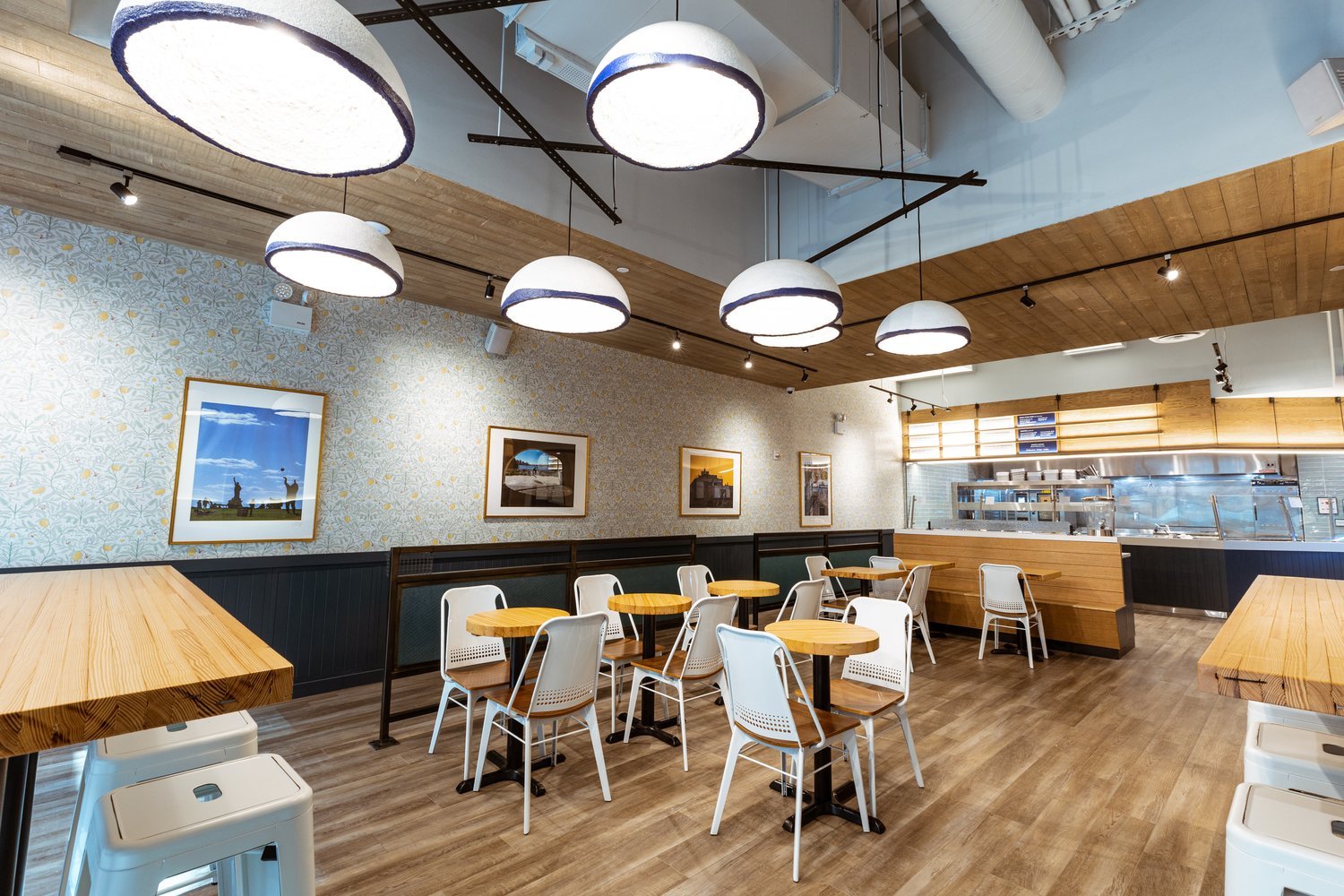
The dining room of Blue Park Kitchen’s second location in Midtown Manhattan feauting MushLume Hemi Pendants
Using Brand Color Without Overwhelming the Interior
Branded interiors can easily become too literal. Repeating a logo or signature color across every surface may create recognition, but it can also diminish the atmosphere of a hospitality space.
At Blue Park Kitchen’s Midtown location, color was used as an accent rather than as the dominant material story. The dipped edge created a recognizable visual detail while leaving the organic texture of the mycelium exposed.
This balance allowed the fixtures to communicate two ideas simultaneously:
The natural surface expressed the restaurant’s interest in considered sourcing and responsible materials.
The blue edge connected the lighting specifically to Blue Park Kitchen.
Because the color was integrated into a functional object, it became part of the guest experience rather than an additional layer of signage or decoration.
Custom brand blue “edge-dipped” Hemi Large Pendants
What the Two Locations Show About Restaurant Lighting
Viewed together, the Lower Manhattan and Midtown projects offer several useful ideas for architects, interior designers and restaurant operators.
A material can communicate shared values
Lighting is one of the most visible design elements in a restaurant. Selecting a grown biomaterial allowed Blue Park Kitchen to make its interest in sourcing and thoughtful production tangible within the interior.
A successful specification can evolve
A second location does not need to replicate the first exactly. Maintaining the same core material can create continuity, while changes in finish, color, scale or configuration give each restaurant its own identity.
Customization can be precise
Project-specific design does not always require creating a completely bespoke fixture. At the Midtown location, concentrating the custom treatment along the lampshades’ edges made a clear visual connection to the brand without concealing the material.
Local production can strengthen the story
MushLume’s shades were grown in Brooklyn for two restaurants located in Manhattan. That proximity added another layer to Blue Park Kitchen’s material narrative: a locally grown lighting product made for a locally rooted, independently operated restaurant.
Natural materials can support contemporary branding
Biological materials do not have to produce a rustic or overtly earthy interior. The pairing of mycelium’s organic surface with Blue Park’s vivid blue demonstrated how a grown material can participate in a bright, contemporary hospitality identity.
Natural, non-toxic lighting grown in Brooklyn, NY
Grown in Brooklyn for New York City
The two Blue Park Kitchen installations represent an ongoing conversation between food, hospitality, design and material innovation.
At the Lower Manhattan restaurant, the natural lampshades introduced mycelium lighting as a quiet expression of the restaurant’s values. At the Midtown location, the blue-dipped edges transformed the same material into something unmistakably connected to the Blue Park Kitchen brand.
Three years separated the projects, but the underlying idea remained consistent: the materials used to create a restaurant can reflect the same level of care as the ingredients used in its kitchen.
For designers planning restaurants, cafés and bars, the Blue Park Kitchen projects illustrate how sustainable lighting can become more than a finishing element. It can establish atmosphere, reinforce identity and give guests a material story they can see—and share.
Blue Park Kitchen’s Lower Manhattan restaurant is located at 70 Pine Street, and its Midtown restaurant is located at 666 Third Avenue in New York City.
Planning a restaurant or hospitality project?
Explore the MushLume lighting collection, learn about our custom capabilities or contact our design team to discuss a project-specific installation.