Learning From Mycelium: Why I Chose to Grow Lighting Instead of Manufacturing It
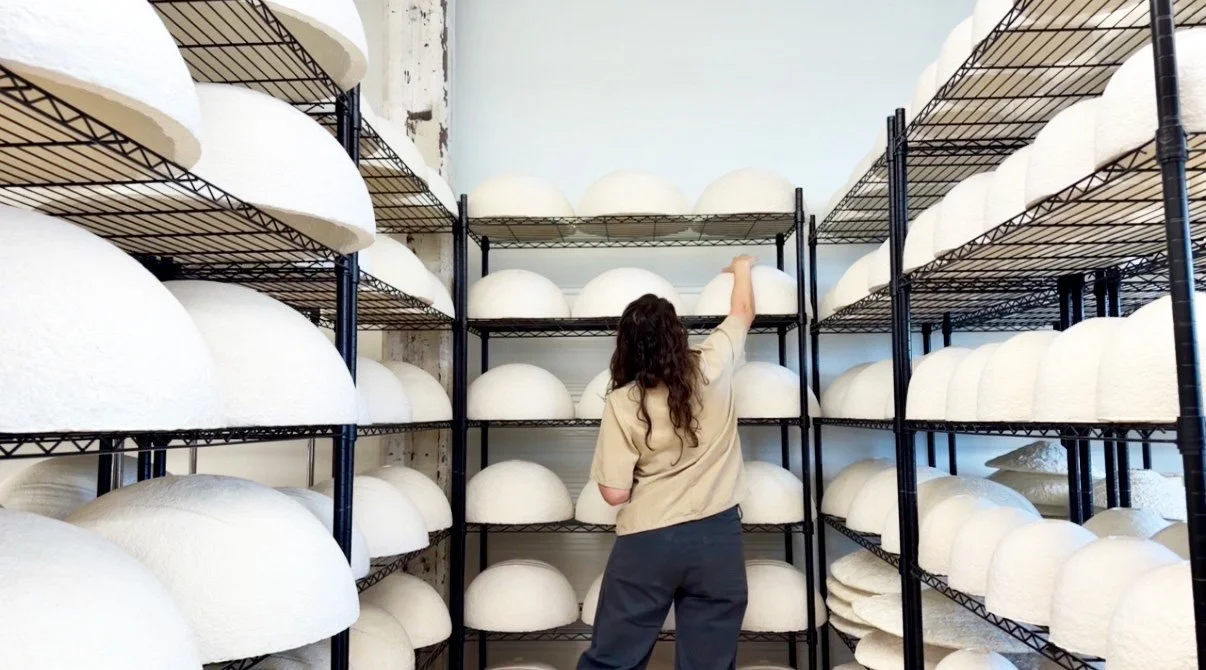
Founder Danielle Trofe in the Brooklyn Studio at MADE Bush Terminal
When people first encounter MushLume Lighting, they usually ask the same question:
"How did you come up with the idea of growing lampshades from mushrooms?"
It's a fair question, but the answer isn't a single moment of inspiration. It's the result of more than fifteen years of curiosity, experimentation, failure, and a growing belief that nature may already hold many of the answers we've been searching for.
When I studied design in Italy, I was taught to solve problems by designing new products. Like many designers, I was fascinated by form, function, manufacturing, and innovation. But the more I learned about the materials we relied upon—plastics, foams, composites, synthetic textiles—the more I began asking different questions.
Where do these materials come from?
What happens to them when we're finished with them?
Could we create products that don't simply do less harm, but actually work in harmony with the natural world?
Those questions ultimately led me to mycelium.
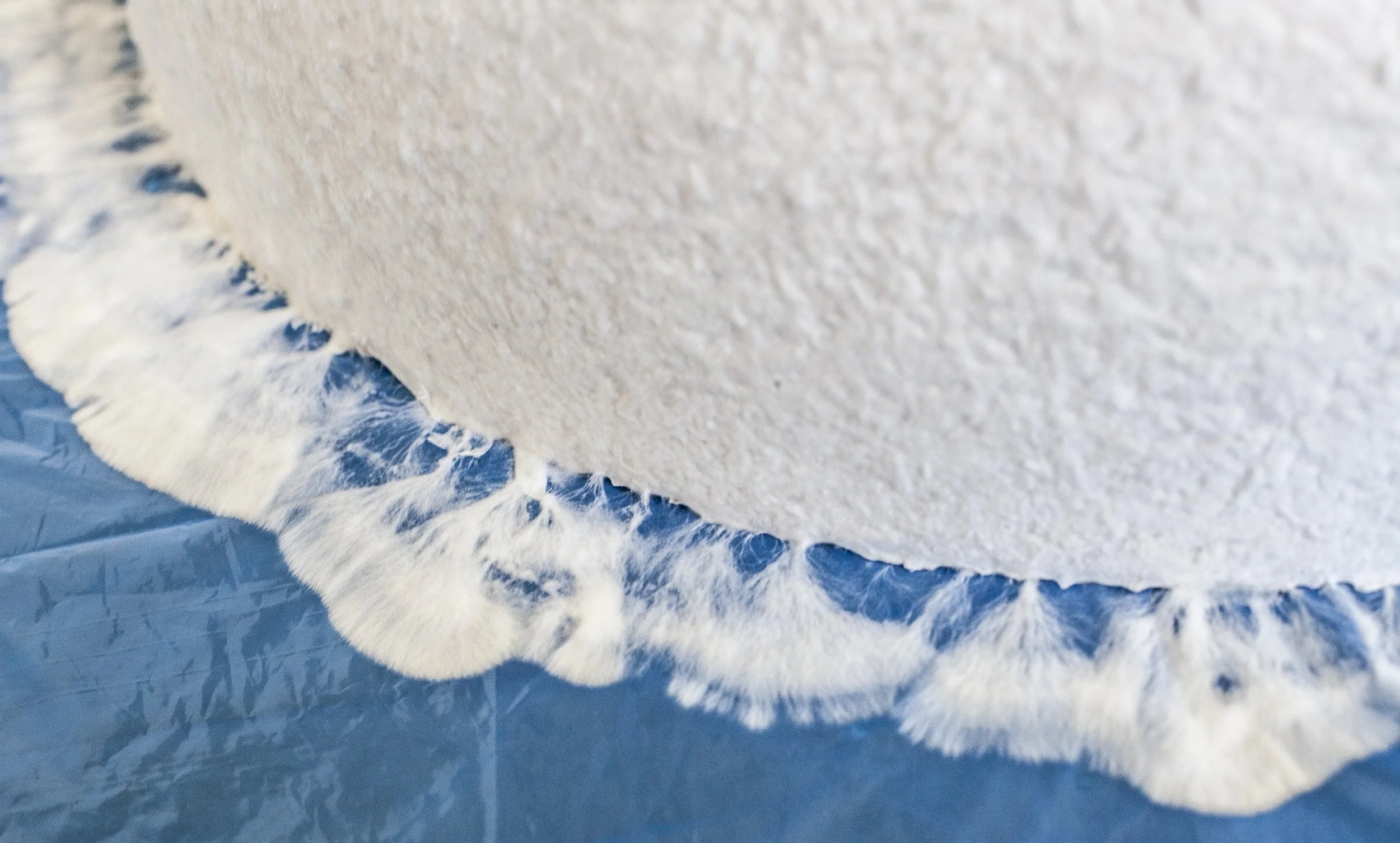
Mycelium hyphae threads growing out from the rim of a MushLume lampshade
Discovering a Different Way to Design
Mycelium is the underground root structure of mushrooms. It is one of nature's master builders, quietly breaking down organic matter and transforming it into new life. For millions of years, it has been creating, connecting, repairing, and regenerating ecosystems without waste.
When I first began experimenting with mycelium, I wasn't simply interested in its environmental benefits. I was captivated by the idea that a living organism could become a co-creator.
Instead of forcing raw materials into shape through energy-intensive industrial processes, what if we could create the right conditions for a material to grow itself?
That simple question completely changed the way I think about design.
From Controlling Nature to Collaborating With It
Traditional manufacturing is often about control.
Materials are extracted, processed, heated, molded, cut, coated, transported, and assembled through increasingly complex systems designed to produce identical outcomes.
Working with mycelium couldn't be more different. Every batch teaches you something.
Temperature matters.
Humidity matters.
The agricultural feedstocks matter.
Even subtle changes in the environment influence the final result.
Rather than forcing nature to behave the way we want, we learn to observe, adapt, and collaborate. That shift in mindset has shaped not only how I design products, but how I approach business, creativity, and life itself.
Nature isn't something to conquer. It's something we can learn from.

Hand packing hemp substrate into a lampshade mold for the mycelium to grow and bind to.
Every lampshade is handmade.
Learning From Mycelium
People often ask me what it's like to work with a living material. The truth is that I've spent years learning about mycelium—but even more importantly, learning from it.
Working with biological systems teaches patience. Growth doesn't happen on our timeline.
It teaches humility because nature constantly reminds you that you don't control every variable.
It teaches resilience because every unsuccessful experiment contains valuable information for the next one.
Most importantly, it teaches that the healthiest systems are built on collaboration rather than extraction.
These lessons extend far beyond the workshop. They influence how I lead our team, build partnerships, and think about the future of manufacturing.
“I’ve spent years learning about mycelium—but even more importantly, learning from it.”
Growing More Than Products
When I founded MushLume, my goal wasn't simply to create another lighting company. I wanted to challenge the assumptions behind how products are made in the first place.
Today, our lighting is grown from agricultural byproducts and mushroom mycelium rather than manufactured from conventional resource-intensive materials. Every piece represents years of R&D in biofabrication, natural materials, and regenerative design.
But I don't see MushLume as the destination. I see it as part of a much larger transition.
Around the world, designers, scientists, architects, farmers, and entrepreneurs are beginning to rethink the relationship between biology and manufacturing. We're discovering that some of tomorrow's most innovative materials may not be invented in a laboratory—they may be cultivated.
That possibility gives me tremendous hope.
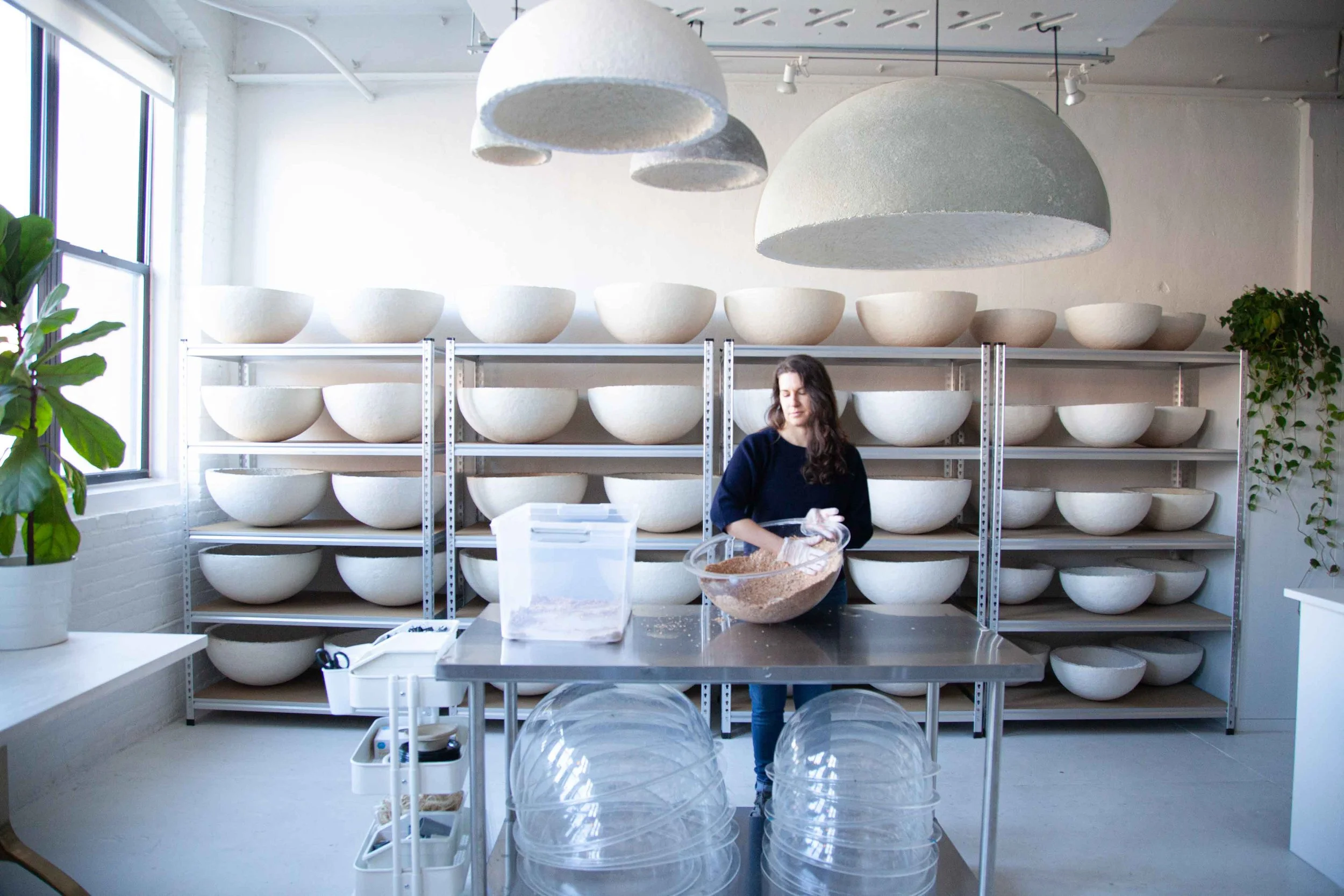
Founder Danielle Trofe molding a lampshade using mycelium and hemp
Designing the Future
The environmental challenges we face cannot be solved by recycling alone or by making small improvements to existing systems. They require us to rethink the systems themselves.
As designers, we have the opportunity—and the responsibility—to ask better questions.
What if materials could be grown instead of manufactured?
What if products could return safely to the earth at the end of their lives?
What if the spaces we inhabit connected us more deeply with nature instead of separating us from it?
These questions continue to guide my work every day. I don't believe nature is something we need to improve upon. I believe it is our greatest teacher.
“If MushLume inspires people to see materials differently, to ask new questions about how products are made, or simply to imagine a future where manufacturing works with nature instead of against it, then we’ve accomplished something far greater than creating a beautiful light fixture.
We’ve helped illuminate a different way forward.”