
From regional agricultural feedstocks to biofabrication in Brooklyn, building a biomaterials industry requires more than a better material. It requires an ecosystem.
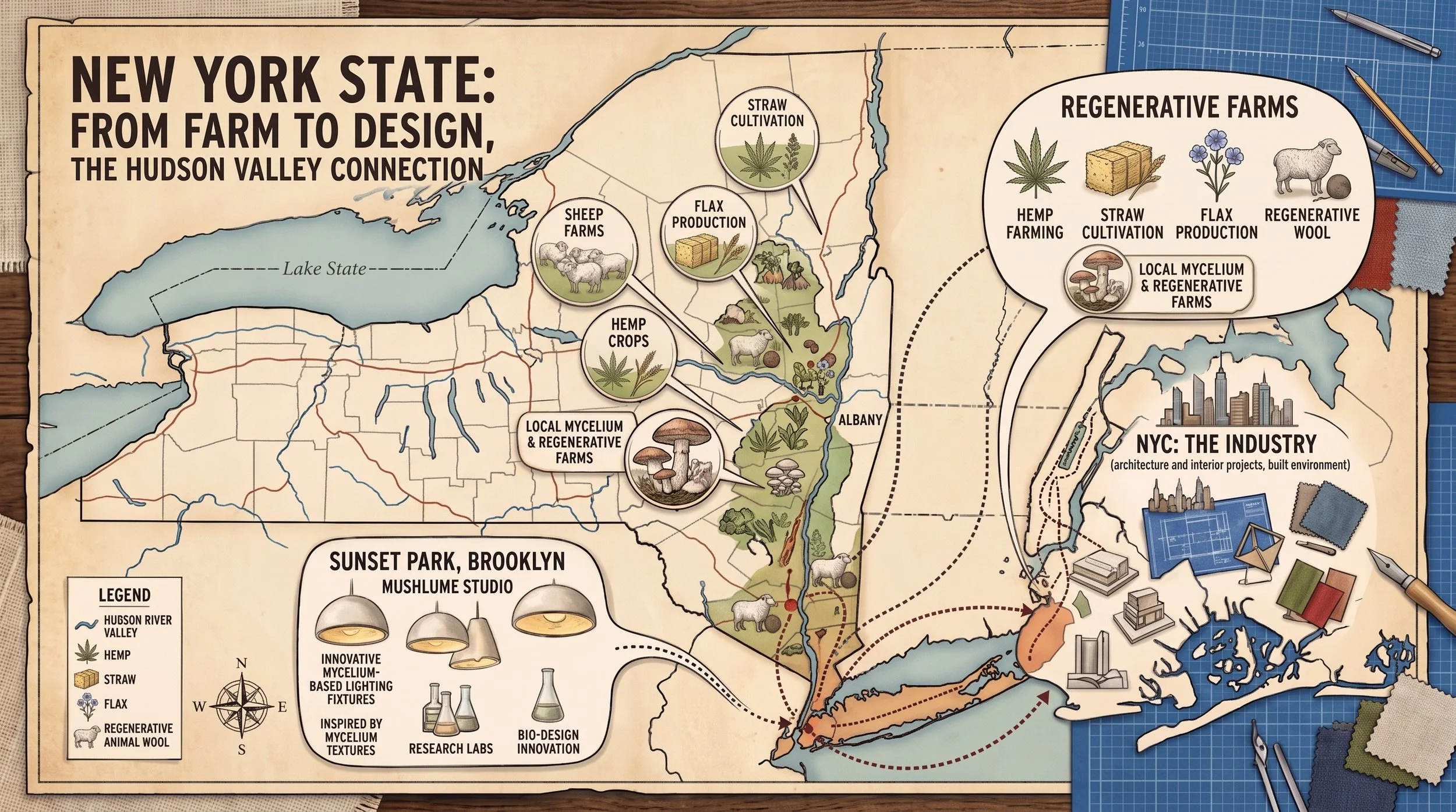
A New York-based biofabrication ecosystem for the acceleration and adoption of biomaterials
Every September, Climate Week brings thousands of people to New York to discuss how we can decarbonize our industries, strengthen our communities, and build a more resilient future. These conversations often focus on the finished innovations: a low-carbon building, an electric vehicle, a renewable material, or a product designed to return safely to the earth. What we see less often is the network required to bring those innovations into existence.
A biomaterial does not become commercially viable in isolation. It needs raw materials, processing knowledge, research, manufacturing space, testing facilities, public investment, design expertise, and customers willing to use something new. It needs relationships between industries that may not yet think of themselves as part of the same system.
“As New York gathers for Climate Week, I have been thinking about what climate action looks like at the scale of a material, a studio, and a regional supply chain. What would it take for agricultural resources grown in New York to be transformed into healthy, high-performing materials and installed in New York buildings? And could New York become a leading ecosystem for making that possible?”
A Biomaterial Is Only the Beginning
When founder Danielle Trofe discovered mycelium-based materials more than twelve years ago, she was fascinated by the possibility of growing an object rather than manufacturing it through conventional means.
Mycelium, the root structure of mushrooms, can be combined with agricultural fibers and grown into solid forms. Instead of forcing an inert material into shape through energy-intensive processes, we create the conditions for an organism to grow and bind loose fibers together.
That biological process became the foundation of MushLume Lighting. Since launching the collection in 2014, we have worked to move mycelium beyond the experimental-material stage and into functional products for hospitality, workplace, retail, restaurant, and residential interiors. That journey has required far more than learning how to grow a beautiful object.
A commercially viable biomaterial must be grown consistently. It must meet safety and performance requirements. It must be translated into products that can be specified, installed, maintained, shipped, and supported. It must be produced at a cost and scale appropriate for real projects. Its environmental benefits must extend beyond a compelling origin story.
The material is the beginning, but the system surrounding it determines whether it can make a meaningful impact.
Mycelium hyphae growing
Building a Biofabrication Studio in Brooklyn
Designboom recently visited our studio at MADE Bush Terminal in Sunset Park, Brooklyn, to document how we grow lighting and acoustic products from mycelium and agricultural hemp. The feature captures an important moment in MushLume’s evolution. Our new space brings material research, prototyping, cultivation, production, finishing, and public engagement together under one roof.
—> Read Designboom Article Here <—
But the larger significance of this move is not simply that we have more room to grow lamps. MADE stands for Manufacturers, Artisans, Designers, and Entrepreneurs. The campus, developed by the New York City Economic Development Corporation, brings a range of creative and manufacturing businesses together within a revitalized industrial site on the Brooklyn waterfront. For an emerging field like biofabrication, this proximity matters.
As we develop new material systems, we regularly need knowledge beyond our own walls. We may need to consult with a metal fabricator about a mounting system, a digital fabricator about a new mold, a testing laboratory about performance requirements, or an architect about how a system will be installed.
Just as a healthy natural ecosystem depends on relationships and exchanges between organisms, an innovation ecosystem depends on shared knowledge, complementary skills, and access to resources. Biofabrication needs laboratories, but it also needs places where research, manufacturing, commercialization, education, and public understanding can overlap. MADE gives us a physical place to begin building those connections.
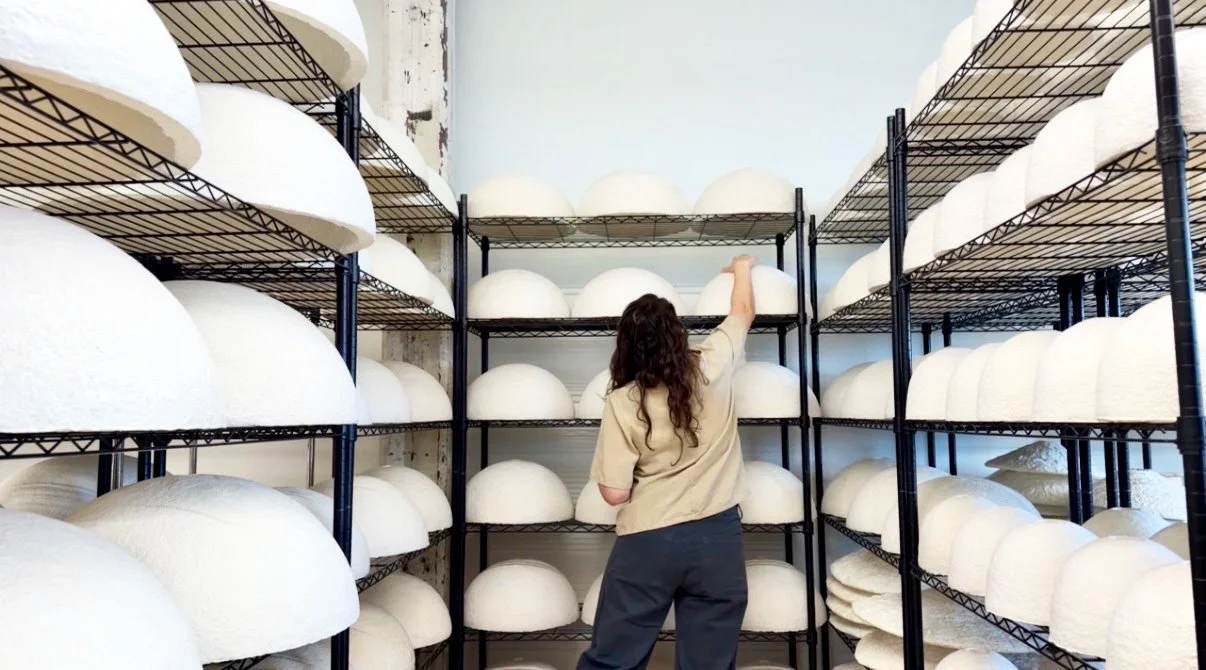
Inside the MushLume studio at MADE Bush Terminal
From New York Feedstocks to New York Interiors
Our next step is to explore whether more of the material inputs used in our work can also come from New York. We are honored to receive a $10,000 grant from the New York Fashion Innovation Center. The grant supports our work to develop and test a mycelium-based acoustic wall system using hemp, New York agricultural byproducts, and regenerative wool for non-toxic, compostable interiors.
Through this project, we plan to identify and evaluate two to three New York-grown agricultural waste streams. These may include hemp hurd, straw, flax byproducts, or other regionally available fibers, along with a regenerative wool source.
We will study how their physical characteristics affect mycelium growth and acoustic performance. Fiber structure, particle size, density, cleanliness, porosity, and moisture all matter. A locally available material is not automatically compatible with biofabrication, nor is it automatically the most environmentally responsible choice. That is why research and testing are essential.
We plan to develop multiple formulations using varying ratios of hemp and New York feedstocks. We will evaluate their growth consistency, structural stability, air permeability, density, and porosity while keeping the formulations free from synthetic binders, synthetic fibers, and added chemicals that could contribute to off-gassing. Selected formulations will then be submitted for third-party acoustic testing under ASTM C423, the standard method used to measure sound absorption in a reverberation room.
The goal is not simply to make an interesting material sample. It is to develop a commercially relevant acoustic system that transforms New York agricultural waste streams into high-performing, commercially relevant acoustic products through a connected regional ecosystem.
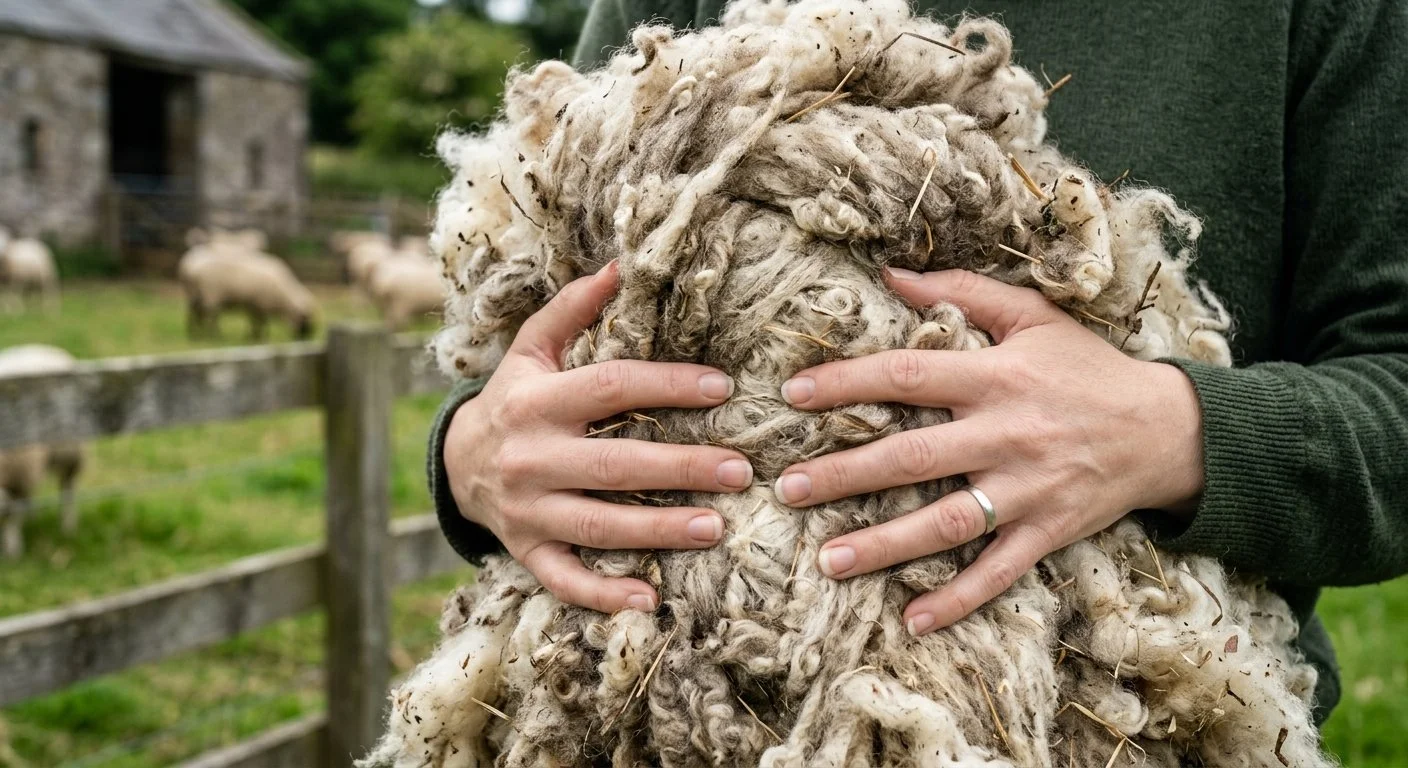
This project is supported by a grant from the New York Fashion Innovation Center and contributes to NYFIC’s work to advance and scale sustainable textile development for fashion and interiors in New York State.
Local Is a Starting Point, Not a Sustainability Claim
There is an understandable desire to equate local production with sustainable production. The reality is more complicated. A material does not become sustainable based on geography alone. We must consider how a feedstock is grown or recovered, how much processing it requires, how it is transported and stored, whether it can perform consistently, and what happens to it at the end of its useful life. We must understand whether using a particular byproduct creates meaningful value for a regional producer or simply relocates an inefficient process.
Our NYFIC-supported research will help us investigate these questions through physical testing rather than assumptions. Our hope is that regional feedstocks can do more than reduce the distance between raw material and finished product. They can create new relationships between agriculture, material science, manufacturing, and the built environment.
Agricultural byproducts that might otherwise have limited value could become inputs for healthy interior products. New demand could support regional growers and processors. Designers could gain greater visibility into where their materials originate. Manufacturers could become more resilient by developing relationships with a wider network of suppliers.
That is the larger opportunity of place-based biofabrication.
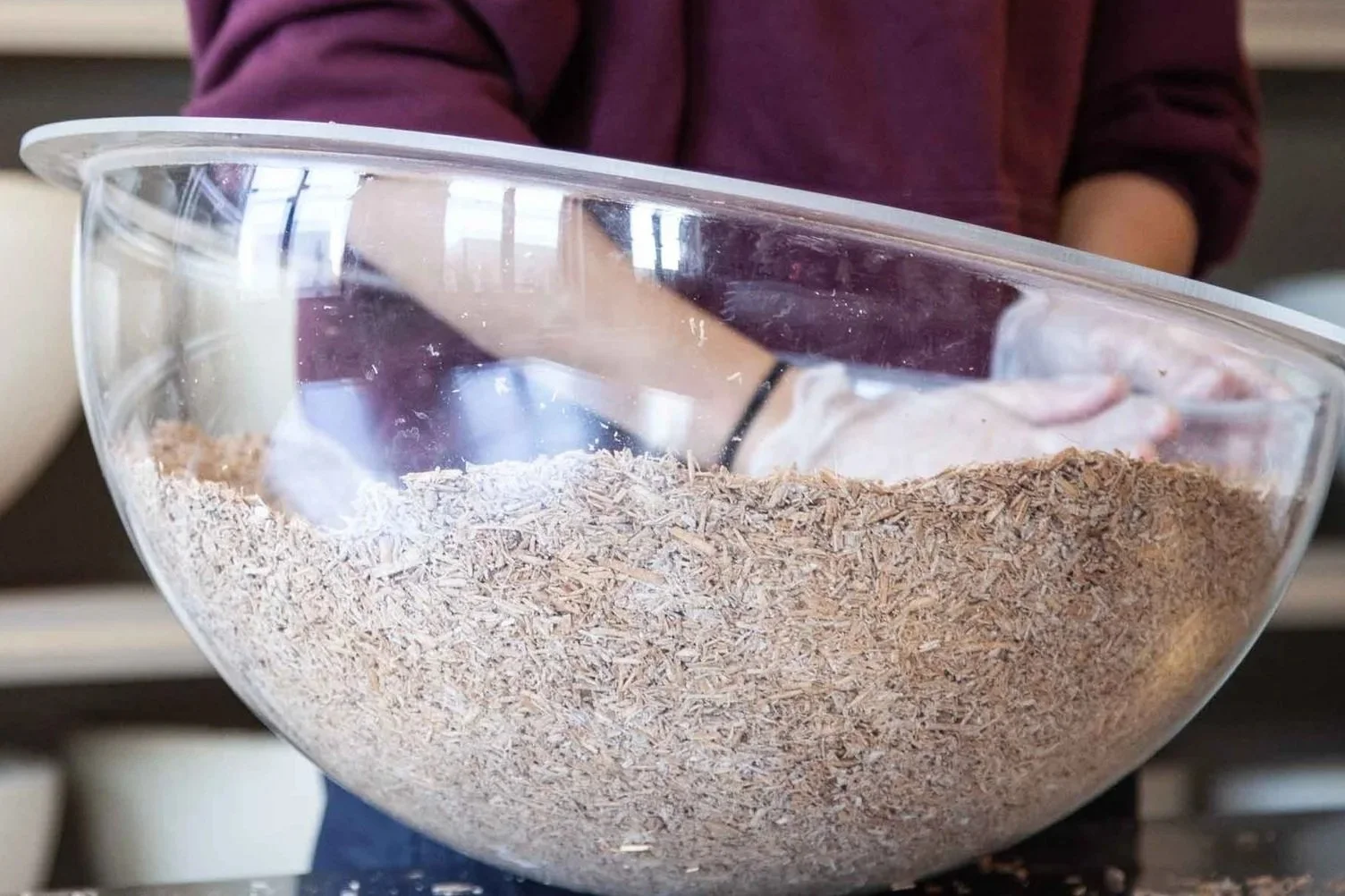
Handcrafting a mycelium and hemp lampshade
Designing the Infrastructure Around the Material
The work happening around us at MADE Bush Terminal reflects another important part of this transition. NYCEDC recently launched a year-long Circular Construction Hub pilot at the campus. Operated by Our Temenos, the initiative will test systems for recovering, sorting, storing, and redistributing construction materials that might otherwise be discarded.
The Circular Construction Hub and our biomaterials research approach circularity from different but complementary directions. One asks how we can preserve the value already contained in existing building materials. The other asks how we can design the next generation of materials more responsibly from the beginning. We need both.
We need infrastructure that keeps useful materials in circulation, and we need new materials designed around renewable inputs, human health, lower-impact production, and responsible end-of-life pathways.
This is one reason place matters. A circular economy cannot exist only as a design concept. It requires physical space for collection, processing, testing, production, storage, exchange, and experimentation. It also requires new economic relationships that make circular practices practical for the people responsible for implementing them.
New York has farmers, fiber producers, researchers, designers, manufacturers, architects, public agencies, and one of the world’s most influential markets for architecture and interiors. The opportunity is to connect these capabilities into a more coherent system.
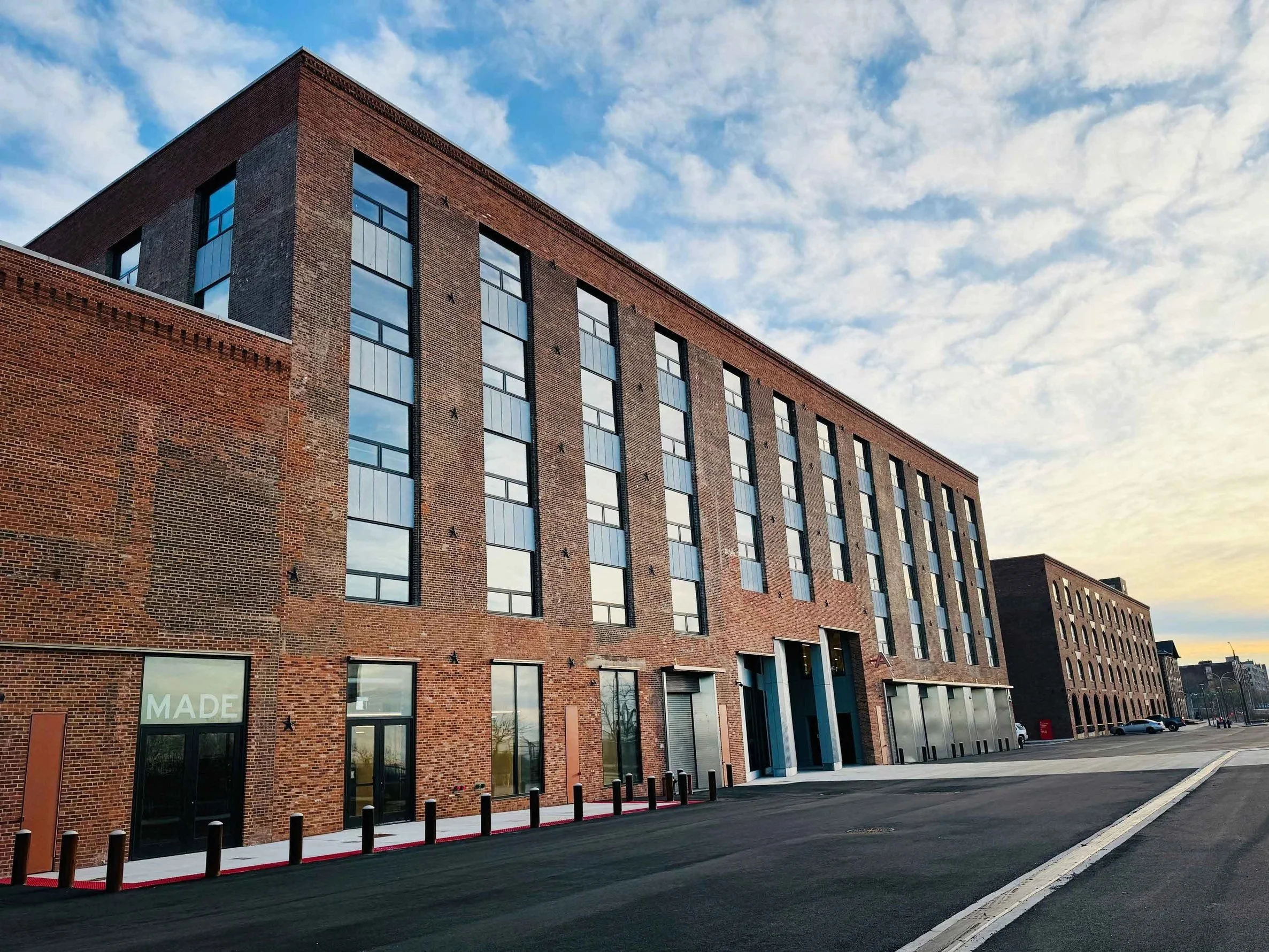
MADE Bush Terminal in Sunset Park, Brooklyn NY
From Material Experiment to Industry
Biomaterials have attracted considerable attention over the past decade, but attention alone will not transform an industry. If we want healthier, lower-impact materials to become part of everyday spaces, we must build the pathways that allow them to compete and perform in the real world.
That means investing in material research and regional processing capacity. It means generating credible performance data. It means giving manufacturers appropriate spaces in which to work. It means helping architects understand how to specify new materials and giving clients the confidence to approve them. It also means creating paid pilot opportunities where emerging systems can be installed, observed, and improved.
For the biomaterials industry, the next era will not be defined solely by discovering new materials. It will be defined by our ability to connect those materials to functioning supply chains, repeatable manufacturing, verified performance, and sustained market demand.
“After twelve years of working with mycelium, I see this as one of the field’s most important challenges. We have proven that a material can be grown. Now we must build the ecosystem that allows it to thrive.”
Growing a New York Biomaterials Ecosystem
A regional biomaterials economy will not be created by one studio, one grant, or one promising feedstock. It will require farmers and fiber processors who understand what manufacturers need. It will require researchers and testing laboratories that can translate biological properties into reliable performance data. It will require public institutions willing to support infrastructure and early-stage innovation. It will require architects, designers, developers, and clients prepared to specify materials that are still building their commercial track records. Most importantly, it will require us to recognize that these participants are part of the same system.
Nature does not create resilience through isolated organisms. It creates resilience through relationships, diversity, feedback, and the continuous circulation of resources. That is what allows an ecosystem to thrive and our industries can learn from that model.
From our new studio at MADE Bush Terminal, MushLume will be working to connect New York agricultural resources with biofabrication, acoustic performance, material health, and commercial interior applications. The NYFIC grant gives us an opportunity to take a focused, measurable step toward that larger vision.
As this research moves forward, we welcome conversations with New York farmers, fiber and agricultural processors, material researchers, testing specialists, manufacturers, architects, and organizations interested in supporting or hosting a pilot installation.
New York already has many of the ingredients needed to become a leader in place-based biomaterials. Now we need to grow the relationships between them.